
The Silent Decline in Bone Health
By Jasmin Polley
Bone health has become an increasingly important part of my clinical work, not because I set out to make osteoporosis a particular focus, but because over the past decade I have been seeing more and more people whose stories made me realise just how quietly bone loss can occur and the emotional toll this can take.
The silent decline: why bone health has become so important to me
There are some health conditions that announce themselves loudly. They cause pain, fatigue or obvious changes that tell us something is wrong.
Osteopenia and osteoporosis can be very different.
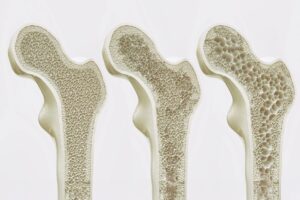
Bone loss can progress quietly for years. You can feel well, eat well, exercise regularly and consider yourself healthy, yet underneath all of that your bones may gradually be losing density and strength. Often, there are no obvious symptoms until a fracture occurs.
This is why osteoporosis is sometimes described as a silent disease, and why bone health has become such an important area of interest for me.
Over the past few years, I have been directly involved in helping numerous clients investigate their bone health, receive a diagnosis of osteopenia or osteoporosis, and then understand what may have contributed to it. I have also had the privilege of helping clients make significant changes to the factors that influence their bone health and, in some cases, see very encouraging improvements in their bone density over time.
The more I see, the more strongly I feel that we need to talk about bone health much earlier.
(Read more about my clinical approach to supporting osteoporosis/osteopenia and bone health here →)
This isn’t just an issue for “frail older people”
I think one of the most damaging misconceptions about osteoporosis is the picture we have in our heads of what someone with osteoporosis looks like.
Two of my clients illustrate this beautifully.
One is a woman in her 70s who has one of the healthiest whole-food diets you could imagine. She is incredibly active, health conscious and has spent years looking after herself.
She was shocked to discover that she had osteoporosis.
When we looked more closely at her story, however, we could see factors that may have contributed. Despite the quality of her diet, her protein intake was low. She had maintained a very lean body composition, and her hormonal exposure had been low, without using menopausal hormone therapy. None of these factors in isolation tells us exactly why osteoporosis developed, but together they were important pieces of her overall bone-health picture.
Another client was only in her 40s when I sent her for testing and we discovered osteopenia.
She looked incredibly fit and had exercised for years. Swimming was a major part of her activity, which is wonderful cardiovascular exercise, but it doesn’t provide the same weight-bearing and resistance stimulus that our bones receive from appropriately prescribed impact and strength exercise.
She also had a history of an eating disorder during her teens and 20s and that history mattered.
Our younger years are an incredibly important period for building peak bone mass. Inadequate energy and nutrient intake, low body weight, menstrual or hormonal disruption, and insufficient mechanical loading during those years can influence the amount of bone we carry with us into later life.
Neither of these women “looked” like someone we might expect to have poor bone health.
And that is precisely the point.
Australia is facing a growing bone-health problem
This isn’t something I am simply seeing more frequently in clinical practice.
A major Australian burden-of-disease analysis prepared by Deakin University for Healthy Bones Australia estimated that 6.2 million Australians aged 50 and over had osteoporosis or osteopenia in 2023. That number is projected to reach around 7.7 million by 2033, a 23% increase in just a decade and a 69% increase compared with 2012. [healthybon…lia.org.au], [healthtran…kin.edu.au]
The same analysis estimated that Australia could see approximately 2.1 million fractures over the decade to 2033. By 2033, the modelling suggests a fracture associated with poor bone health could occur approximately every 30 seconds. [healthybon…lia.org.au]
And even these figures don’t tell the whole story.
The Australian Institute of Health and Welfare notes that the true prevalence of osteoporosis and osteopenia is likely to be higher than diagnosed estimates because many people remain undiagnosed. [aihw.gov.au]
That is the insidious nature of bone loss.
You generally can’t feel your bone mineral density declining.
Your bones are living tissue
I think this is one of the most empowering things to understand.
Bone isn’t an inert structure that simply becomes old and brittle as we age. It is metabolically active, living tissue that is continually being broken down and rebuilt.
Bone health is influenced by many factors across our lifetime: genetics, hormones, menopause, nutrition, protein and energy intake, calcium and vitamin D status, muscle mass, resistance and impact exercise, certain medications and medical conditions, smoking, alcohol, previous fractures and our health during the years when we were building peak bone mass.
This is also why I don’t believe a diagnosis should become a source of guilt or blame.
When someone is told they have osteoporosis, the response can be profound.
- “How did this happen?”
- “I thought I was healthy.”
- “Have I done this to myself?”
- “Am I going to fracture?”
- “Should I stop lifting things?”
- “Is it too late?”
I hear the fear underneath these questions and this is the part of osteoporosis care that particularly matters to me.
A diagnosis should not leave you frightened of your own body. It should become an opportunity to understand it better.
The earlier we protect our bones, the better
Ideally, we shouldn’t wait for osteoporosis to start thinking about bone health.
We should be talking about building strong bones in adolescence and early adulthood and protecting them throughout our 30s, 40s, perimenopause and menopause.
We should be thinking about maintaining muscle as we age, eating adequate protein and nutrients, incorporating appropriate resistance and weight-bearing exercise, and identifying medical, hormonal or nutritional factors that may increase bone loss.
But I also want to make something very clear. If you have already been diagnosed with osteopenia or osteoporosis, it does not mean there is nothing you can do.
There is so much we can investigate, understand and address.
Depending on your individual circumstances, this may involve working with your GP or specialist to assess fracture risk and whether osteoporosis medication is appropriate, alongside nutrition, resistance and impact exercise where safe, adequate protein and energy intake, calcium and vitamin D sufficiency, hormonal health, muscle strength and other modifiable risk factors.
It is not about promising that every person can completely “reverse” osteoporosis. Bone-health outcomes are individual, and appropriate medical treatment can be extremely important.
It is about asking a better question:
“What can we do from here to protect my bones as much as possible?”
Turning fear into understanding
Because I have seen how overwhelming this diagnosis can be, I am currently developing the Better Bones Blueprint.
I want this to be something you can work through calmly, in your own time, whether you have already been diagnosed or you’re beginning to wonder whether osteoporosis might be something you need to think about.
The low-cost package will include:
- A webinar explaining osteoporosis, osteopenia and how our bones change across our lifetime
- A detailed questionnaire to help you identify your own potential risk factors
- An eBook walking you through the many aspects of bone health, what to prioritise and why osteoporosis or osteopenia may have developed in the first place
- Guidance around speaking with your GP, what you may want to investigate and when additional professional support may be worthwhile
- Information about nutrition, exercise, muscle, hormones and other important aspects of maintaining bone strength
- A fact sheet to take to your GP so you can have a more informed discussion about treatment and medication options
Most importantly, I want it to help people move away from the fear, shock, guilt and blame that can accompany a diagnosis.
Because knowing that your bones are vulnerable can make you afraid to use your body.
I want to help you do the opposite.
To understand your body. To know what questions to ask. To know what deserves attention. To work collaboratively with your healthcare team. And ultimately, to feel confident about what you can do to protect your bones and your independence for the years ahead.
Your bone-health story starts long before a diagnosis
One of the greatest lessons my clients have taught me is that we cannot tell the strength of someone’s bones simply by looking at them.
- You can eat beautifully and still have risk factors.
- You can be fit and active and still have risk factors.
- You can be young and still have risk factors.
And you can reach your 60s or 70s before discovering that experiences much earlier in your life may have influenced your bones today. This is why I feel that the body composition testing we do in clinic is important, as low muscle is a good reason to have bone density checked much earlier than the current Australian recommendation of 70! I think that testing at 50 would provide a much better baseline before the hormone declines of menopause. However, some women should be tested much earlier again.
That isn’t a reason for blame. It is a reason for awareness.
The earlier we start protecting our bones, the better. But wherever you are starting from, there are steps you can take to better understand your risk, support your bone health and have informed conversations about treatment.
If you have questions about osteoporosis or osteopenia, or you are concerned about your own risk, please reach out and book a free chat with me.
And stay tuned. I will be sharing more details about the Better Bones Blueprint very soon.
References
- Healthy Bones Australia. Osteoporosis and fractures in Australia: A burden of disease analysis 2023–2033. Prepared by Deakin University, Deakin Health Economics, 2024. [healthybon…lia.org.au]
- Deakin Institute for Health Transformation. New report reveals increased prevalence and economic burden of poor bone health. 2025. [healthtran…kin.edu.au]
- Australian Institute of Health and Welfare. Osteoporosis and minimal trauma fractures. Updated 17 June 2024. [aihw.gov.au]